
Early County Court Docket Searches
Early County has no single search box for every court. The first split is between county and city venue. Early Superior Court and Early State Court route online access through the Georgia E-Access Court Records directory. That directory sends both courts to PeachCourt. Probate, Magistrate, Juvenile, and municipal records do not become searchable that way. A county name alone is not enough. Federal cases belong to the Middle District of Georgia, Albany Division.
Gather details before any Early County docket search. Bring the case number, court name, party spelling, filing type, or citation caption. A name alone may return nothing. The wrong court may be selected, a record may be restricted, or the provider may require an exact identifier. Ask the clerk to confirm the venue. Do not treat a blank result as proof that no case exists.
- Read the case caption, citation, or notice and identify Superior, State, Probate, Magistrate, Juvenile, municipal, or federal court.
- For Early Superior or State Court, open Georgia E-Access and follow the Early court row to PeachCourt.
- Use the county and court selectors, then enter the exact case number when one is available.
- Compare the result with the docket fields, event dates, documents, and access notices rather than relying on one status word.
- Ask the responsible clerk about a counter inspection, Public Access Terminal, ordinary copy, or certified copy when the online record is limited.
Early County Court Search Through PeachCourt
PeachCourt is the named access and e-filing provider for Early Superior and Early State Court. The Georgia directories list it that way. The provider advertises free public and non-attorney registration. Still, registration comes before the visible search workflow. Expect to supply a first name, last name, email, confirmation email, password, confirmation password, secret question, secret answer, reCAPTCHA, and agreement to the terms on the signup form.
Once logged in, PeachCourt help describes a Search, then Cases path. Pick the county and court before entering the exact case-number format. A filing search needs the exact Peach Number. The public unauthenticated case route redirects to login. Because of that, the Early name fields, required markers, result columns, viewing charges, and refresh schedule are not published. That limit matters: account-history filters are not automatically a countywide index.
| Observed PeachCourt concept | What it means for an Early search |
|---|---|
| County and court | Select Early and the correct Superior or State Court before searching. |
| Case number | PeachCourt help calls for the exact local format; no public Early format was captured. |
| Peach Number | Used for a filing search after login, not a substitute for every case identifier. |
| Account history | Filters include case number, case title, court, filing date, and payment amount, with a 365-day history limit. |
Court Dockets: What They Show
An Early County docket is an event history, not just a stack of document links. A public result may show many details. These include the court, case number, case style, filing date, event descriptions, next setting, disposition, and a control for documents. The exact fields vary by provider and court. A public case header can remain visible. Meanwhile, an attachment, exhibit, juvenile entry, or protected identifier can be withheld.
Always read the date and the event together. A complaint or accusation opens a case; it is not a judgment. A motion asks for a ruling; it is not proof that the judge granted it. A continuance moves a setting. A disposition records an outcome. Need a current answer? Compare the most recent docket event with the clerk or a signed order.
| Case Number | Use the exact provider or clerk identifier. Early Superior and State formats were not exposed publicly during research. |
|---|---|
| Case Style | Names the case and helps separate a county case from a city or federal matter. |
| Filing Date | Marks when a pleading or case was lodged, not when a hearing occurred. |
| Docket Entries | Lists filings, service, motions, orders, settings, pleas, judgments, and other events when public. |
| Hearing Setting | May show a date, time, courtroom, judge, and setting type; the circuit calendar may show less. |
| Disposition | Shows a recorded result. Read the final order and later appeal or post-judgment entries when available. |
| Access Label | Identifies a sealed, redacted, restricted, or otherwise unavailable document or entry. |
Early County Docket Terms
Local calendar papers and provider entries use short terms that are easy to overread. The 2017 Early arraignment calendar works as a dated example of local format. It shows local format only. Its appearance does not establish a current charge or result. Treat a live entry the same way. A listed setting is a scheduling event. A listed charge is not a conviction.
These plain meanings help separate an event from an outcome. When a word in a current Early record does not match the list, ask the clerk for the local definition rather than guessing from a similar entry.
- Arraignment
- A criminal appearance where charges and a plea are addressed; the calendar date is not a final disposition.
- Continuance
- A setting moved to another date. The later date controls after the court enters the change.
- Disposition
- The recorded outcome of a case or claim. It may be partial, final, or followed by another order.
- Order
- A judge’s direction or ruling. The docket title may not show every term in the signed document.
- Restricted
- An entry or document with access limited by law, rule, or a court order.
Early County Courts and Their Dockets
Venue controls the search. The Superior Clerk's office is the local records contact for Superior, State, and Juvenile material, but the courts are not interchangeable. Probate and Magistrate have separate county offices. City clerks keep municipal matters. A federal filing leaves the Georgia county system for the Middle District of Georgia, Albany Division.
The county departments directory is a useful starting point for office names. It is not a case index. The official county court-department route reinforces the key distinction: finding an office is different from finding a docket. The Early County court departments directory lists the court and justice offices that need separate routing.
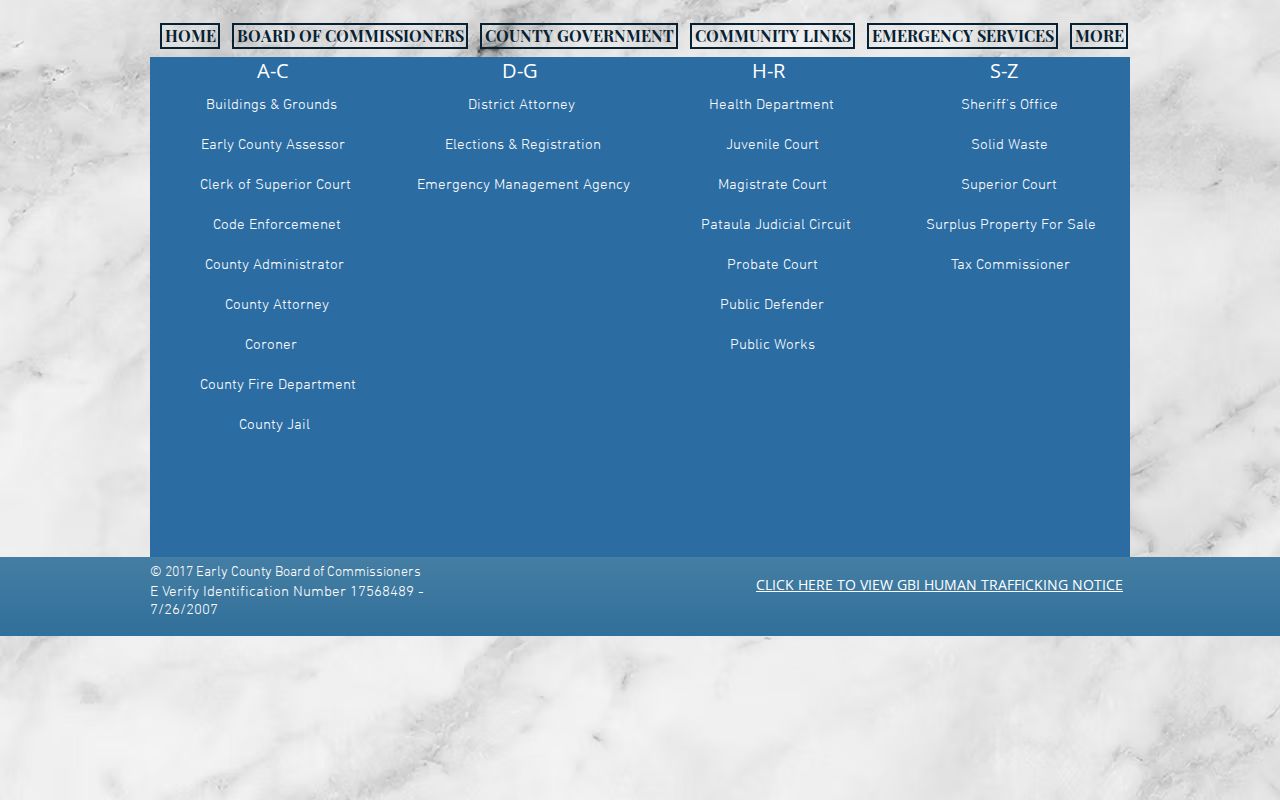
The right row in the directory points a records request toward the office that can confirm the case, setting, or document. That routing step saves a wasted trip or call to the wrong clerk.
| Court | Docket scope | First search route |
|---|---|---|
| Superior Court of Early County | Major civil matters and felony-level criminal matters in the Pataula circuit. | Georgia E-Access to PeachCourt, then Gayle Anderson’s clerk office. |
| Early State Court | State Court criminal and civil matters within its jurisdiction, including traffic matters handled there. | Georgia E-Access to PeachCourt and the Superior Clerk. |
| Probate Court | Wills, estates, guardianships, conservatorships, and licenses. | Early Probate Court office and its official directory. |
| Magistrate Court | Small civil claims, warrants, preliminary matters, and some county code-enforcement matters. | Separate Magistrate office; confirm the current contact. |
| Municipal courts | City ordinance and traffic matters held by the issuing city. | City clerk or city vendor route, not automatically PeachCourt. |
| Federal Albany Division | Federal civil, criminal, and bankruptcy matters for the federal venue. | PACER, CM/ECF information, or the federal clerk. |
Early County Court Docket Map
Blakely is the county seat, yet the courthouse square is a routing point rather than one unified docket room. A filing or citation identifies its venue. A city ticket follows the city that issued it. A Probate file follows the Probate office. A Juvenile matter has stronger confidentiality limits. A federal case belongs in Albany.
For county-level matters, the Pataula Judicial Circuit matters too. The circuit includes Clay, Early, Miller, Quitman, Randolph, Seminole, and Terrell Counties. A circuit-wide judge page or calendar can therefore run broader than an Early County search. Use the county and court name in the caption to narrow the question, then ask the clerk if the event is not visible.
Court Dates and Settings in Early County
Early County court dates may appear in a docket entry, a circuit calendar, a city citation, or a paper notice. The date alone is not enough. Confirm the court, time, courtroom, judge, and setting type. A continuance, emergency closure, plea, dismissal, or judge's order can change the next event after an older calendar was published.
The Pataula circuit calendar is a useful public starting point. The clerk remains the verification source. A docket search can locate a case. A calendar search may only locate an event description. The fuller walkthrough of the calendar controls is in the Early County court schedule.
Early County Circuit Calendar
The Pataula Judicial Circuit posts its calendar through a KeepandShare monthly view. That page offers plenty of controls. Views include Today, Day, Week, Month, Year, Event, Tag, and Timeline. A text search box sits there too. From and To fields join the advanced options. Event-note and overlay checkboxes round out the view, along with print, export, and reset. Year links run from 2019 to 2033 in the view provided.
Do not mistake this for a countywide case index. A blank result can mean several things. A date filter may be active, or a circuit-wide event may lack an Early tag. The event may have been left off. The matter may sit in another court entirely. The current Uniform Superior Court Rules build the trial calendar on a ready list. Place, date, and time are distributed from there. Treat older calendar material as dated history. It is not a promise about where a case stands today.
A 2017 arraignment notice from Early County shows the old paper style. It names Early County Superior Court, the term, and Court Square in Blakely. A start time and representation instructions appear as well. So do the signatures of judge and clerk. The notice also warns that cases may continue hour to hour. They may run day to day until dismissed. That is calendar language, not the current status of any named case.
Docket Access Under Georgia Law
Georgia treats court records as public. That openness runs through the courts, not a general records law. Uniform Superior Court Rule 21 sets the current rules on access limits and redaction. The Georgia Attorney General's guidance also draws a line. It separates court files from ordinary county administrative records. An Open Records request works fine for budgets, minutes, and policies. It does not replace the clerk's own court-file process in Early County or anywhere else.
For statewide routing, start at the official Georgia Courts gateway and its E-Access directory. It points you toward the right court and provider. It does not promise that every Early County court docket is searchable there. Treat it as a map rather than an answer key.
Open the Georgia Judicial Gateway first. Then pick a court or a provider.
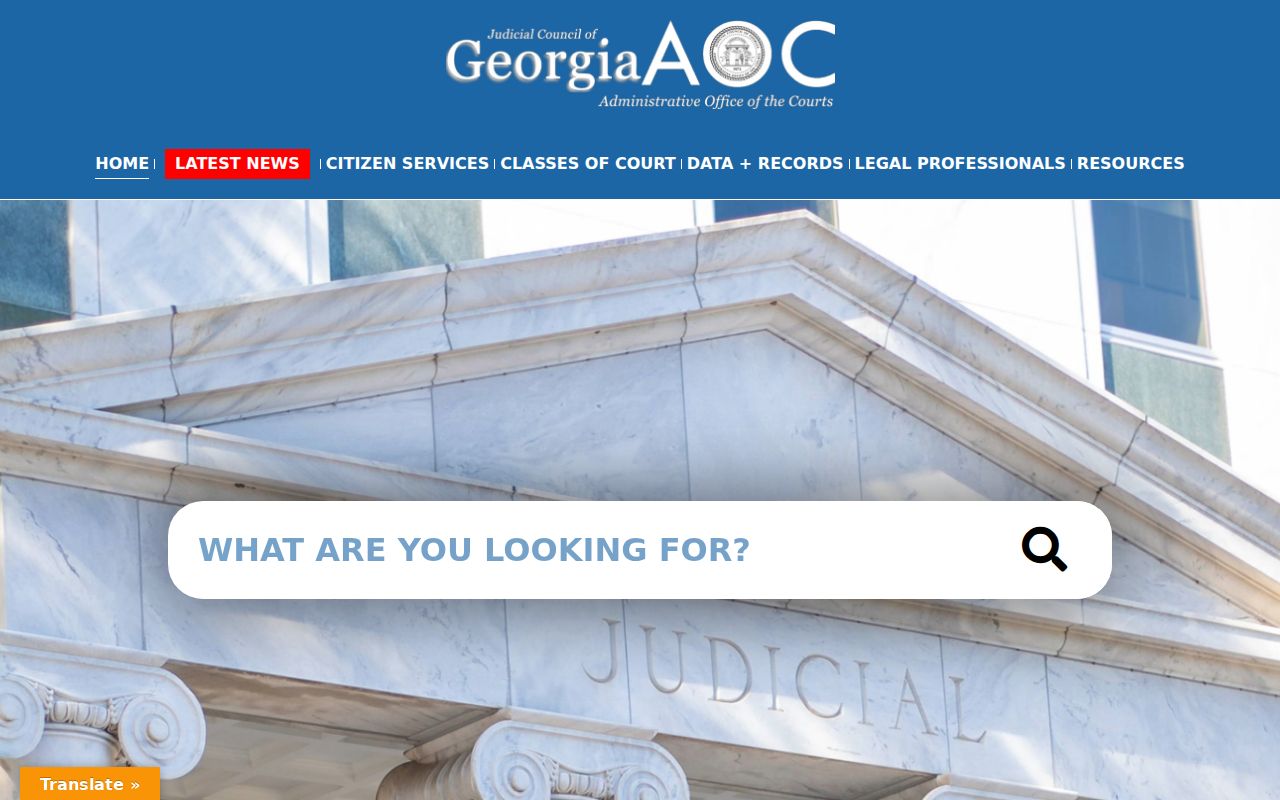
Let the gateway route you statewide, then confirm the record owner with Early County's clerk or the city office before you chase a docket any further.
Access rules to keep straight:
Uniform Superior Court Rule 21 starts with public access but allows limits and redaction when law, rule, or a court order requires it.
Georgia court-record access guidance explains that court records use court-specific procedures rather than an ordinary administrative Open Records request.
Georgia Open Records Act request guidance is the route for covered county administrative records, not a way around a sealed court file.
HB 685 and HB 686 authorize specified Early Magistrate and Probate technology charges up to $10, but do not prove that the local office charges the maximum.
Early County Court Record Access
Online is just one channel. If PeachCourt registration stalls, call the Superior Clerk. Ask about the courthouse Public Access Terminal. The statewide Clerks association says every county courthouse has one for on-site electronic filing and viewing. You can also request an inspection or copies under the clerk's procedure. Early County has not published its terminal room, hours, software, payment method, or copy charge. Ask the clerk's office directly.
Blakely is the county seat. The official Early County home page lists the civic center plus a general county contact. That contact helps with orientation. It is not Gayle Anderson's records office, though. Mailing a court request to the general county address may only cost you time. Confirm the destination first.
Visit the Early County official home page for the county's general contact, then bring court-file questions to the clerk's office.
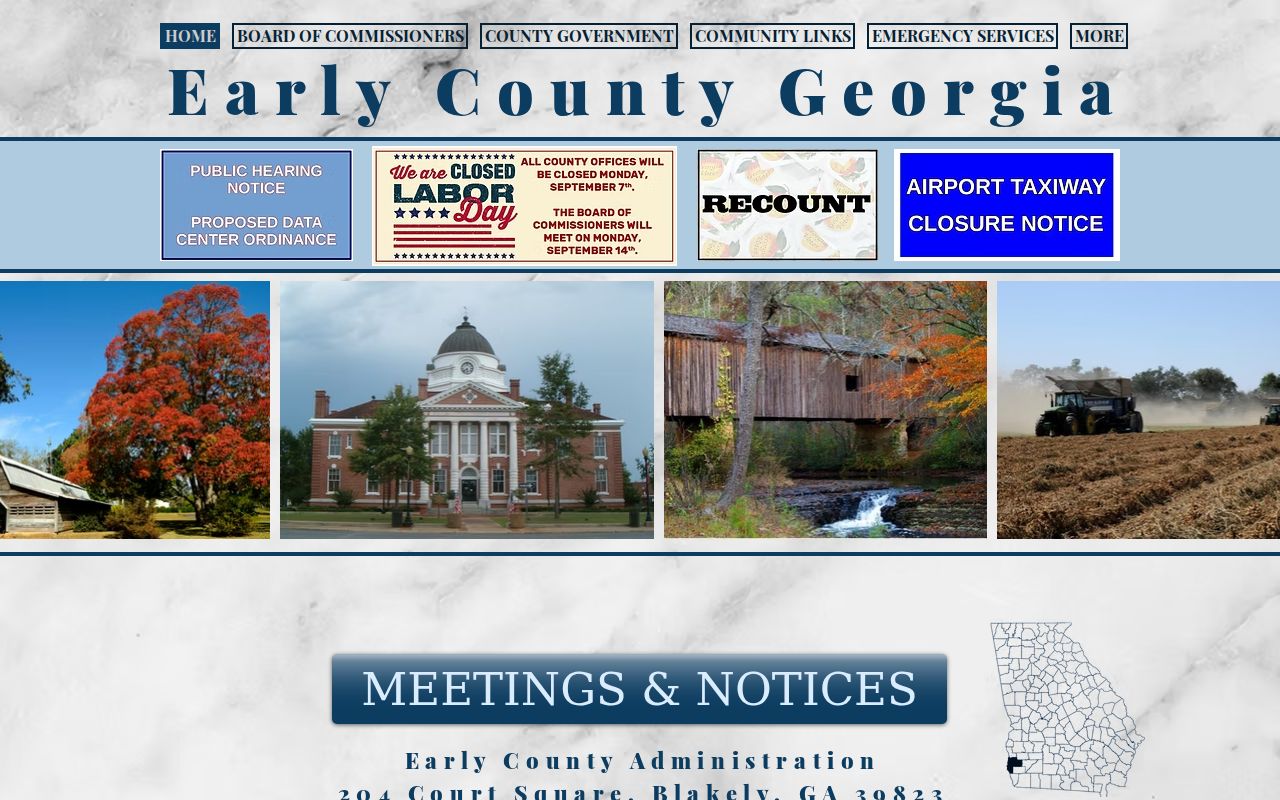
Keep the channels straight: county administration, the clerk's counter, a city clerk, and the federal courthouse each hold different court records.
How the Clerk Keeps Docket Records
Gayle Anderson serves as the elected Clerk of Superior Court of Early County. Her office also supports Early State and Juvenile Courts within the local circuit. That makes the clerk the practical source for Superior, State, and Juvenile filings. Clerk-side calendars and notices come from the same office. Probate and Magistrate run as separate court offices. The Georgia Clerks association describes the elected Superior Clerk as the keeper of civil and criminal filings. When a docket search result looks incomplete, the clerk is the office to call. Before mailing anything, phone the office. Identify the record by court, case number, party role, filing date, and the type of copy you want. Ask what you need. Options include inspection only, an ordinary copy, a certified copy, or a restricted document. The statewide cost schedule offers a starting point. Early County sets its own local fees, so confirm the exact amounts with the office.
Early Superior Court Clerk
111 Court Square, Suite C
Blakely, GA 39823
(229) 723-3033
Pataula Judicial Circuit clerk directory
| Request type | What to confirm first |
|---|---|
| Online document | Whether PeachCourt displays the document and whether account access is required. |
| Counter inspection | Which office owns the file, terminal availability, and current counter process. |
| Mail request | Correct mailing address, copy or certification fee, payment type, and return method. |
| Certified copy | Certification charge, document scope, and whether the record is public or restricted. |
Early County Docket Contacts
Not every question goes to the same office in Early County. The Superior Clerk keeps the records. Superior, State, and Juvenile Court files all sit there. Judge Will Caudill’s Probate office answers probate matters on its own line. Municipal tickets belong to Blakely’s city traffic clerk. Federal cases run through the Middle District of Georgia’s Albany Division. A general county number can help. It points you the right way, but it is no substitute for the office that actually holds the docket.
Issuing boundaries matter just as much for code cases. A citation from unincorporated Early County can land in Magistrate Court. A city citation stays with the city court printed on the ticket. For that split, the Early County code-enforcement information sets out which authority handles which citation.
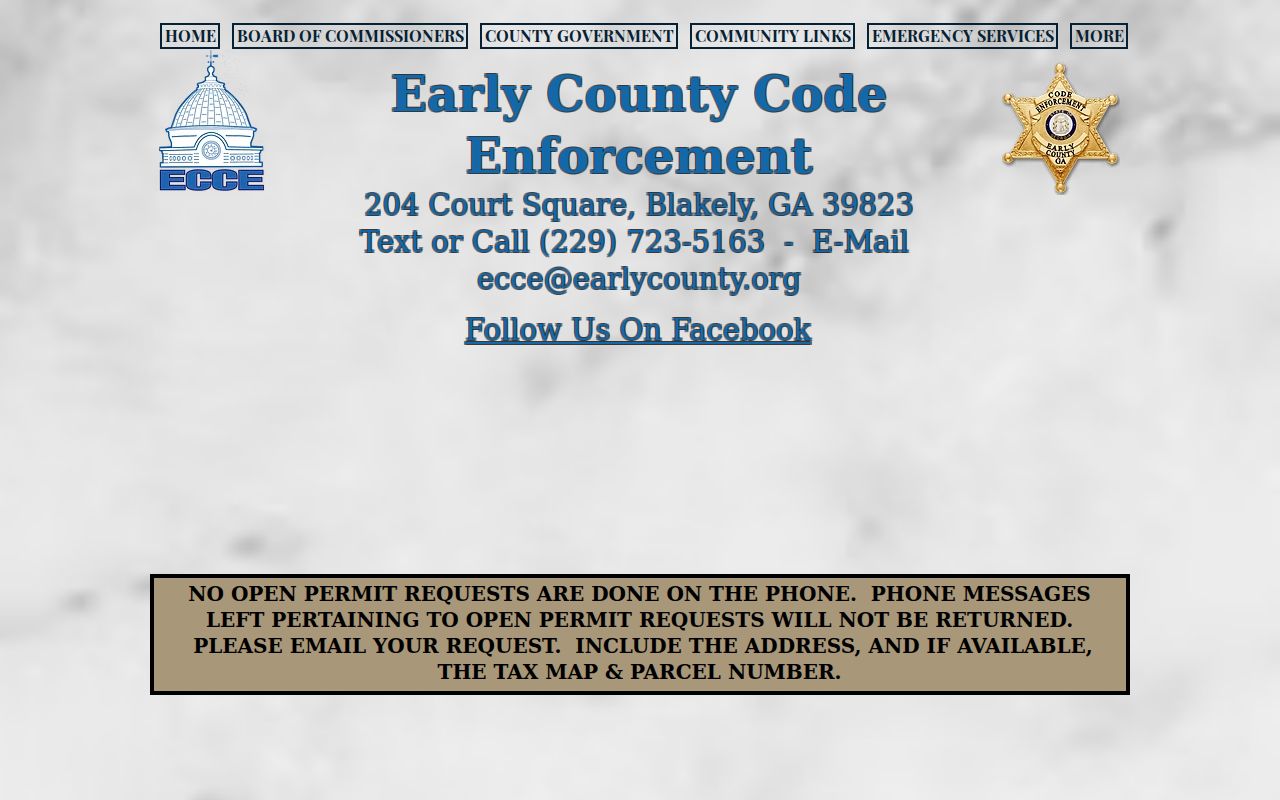
One line on the citation settles it. The issuing agency and the court caption tell you whether the Early County docket, the Blakely city record, or a state filing is the right place to look.
| Question | Likely official contact |
|---|---|
| Superior, State, or Juvenile record | Gayle Anderson, Clerk of Superior Court, (229) 723-3033. |
| Probate matter | Early Probate Court, Judge Will Caudill’s office, (229) 723-3454. |
| Blakely traffic ticket | City Court Clerk Sherry Davis, (229) 723-3414, or the city’s GovernmentWindow route. |
| Federal case | Middle District of Georgia, Albany Division, through PACER or the federal clerk. |
Early County Docket History
Early County dates to 1818. Lawmakers named it for Peter Early. Over time, boundary shifts, the Kolomoki Mounds, and peanut farming shaped a courthouse community that still centers on Blakely's square. That history explains why one address on the square remains the practical starting point, even though court records now divide among the provider, the clerk, city offices, Probate, Magistrate, and federal channels.
A county story is context, not a live docket. Use it alongside the current provider and clerk routes. A historic courthouse image cannot confirm a present setting, fee, or office hour.
For the county-seat background behind the records map, see the Early County history page.
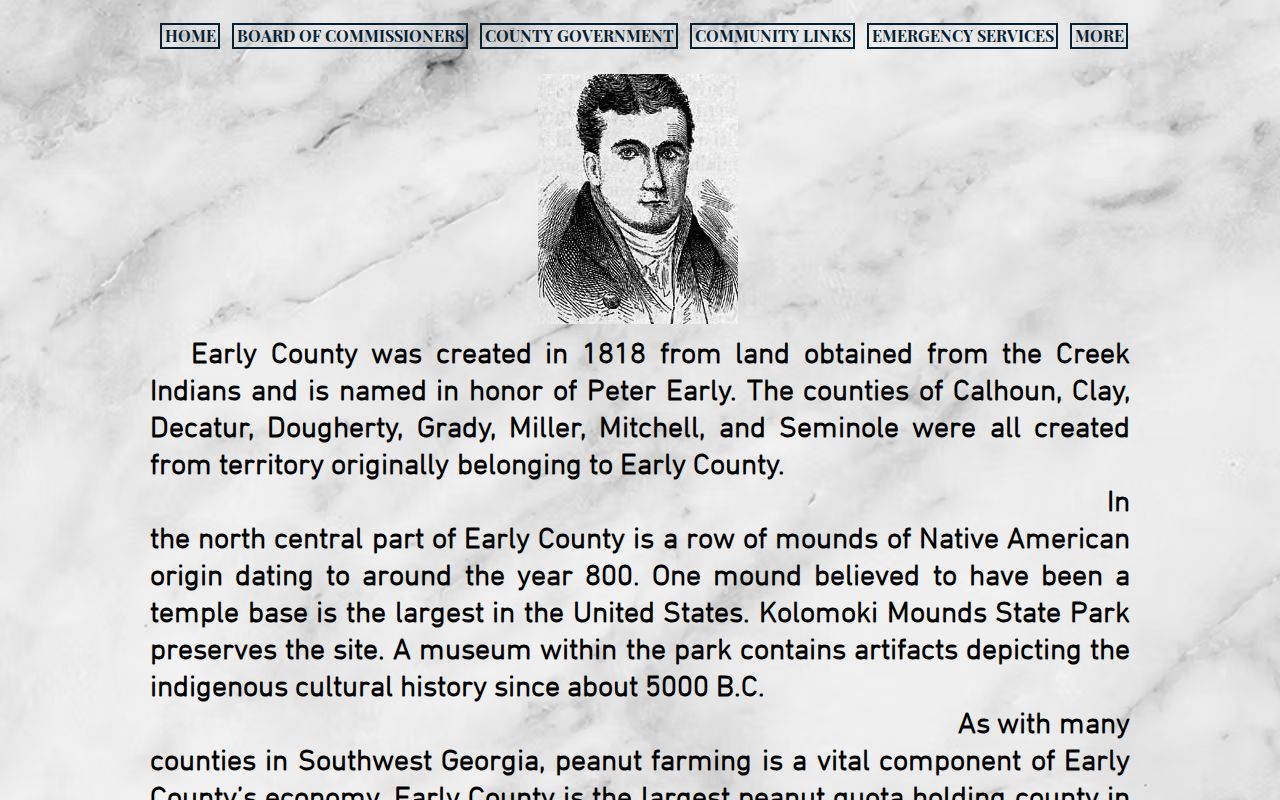
History gives the place; the clerk and the court provider hold the current record.
Early County City Docket Routes
Cities in Early County vary widely in what they offer online. Blakely routes traffic cases through a city-linked GovernmentWindow page. Arlington lists a municipal clerk and judge with the Georgia Municipal Association. It posts no public docket form. Damascus passed a 2024 charter that sets up a municipal court. The charter grants traffic authority, requires public court rules, and allows appeals to Superior Court of Early County. Yet it runs no live search portal. Jakin's profile simply omits a municipal-court row. Verify with the clerk instead of assuming no process exists.
Call the city clerk first whenever a citation names that city, and only then use PeachCourt. The Early County Traffic Court page explains the county-wide traffic route and its waiting-window rules. Each city link below gives its own records path.
City-by-City Court Dockets in Early County
Early County counts four incorporated cities, not five. The official population figures rank Blakely first at 5,371, Arlington second at 1,209, Damascus third at 212, and Jakin fourth at 131. Because the city profile pages do not share one common vintage, treat these as displayed official values rather than figures from a single Census year. Each city card below points to that place's own court-record route. It also keeps the city-versus-county distinction clear.
The official city list confirms the four-city set. It cannot replace a citation or a docket caption. Nor can it replace a call to the current city clerk.
Check the Early County incorporated-city list before choosing a city court.
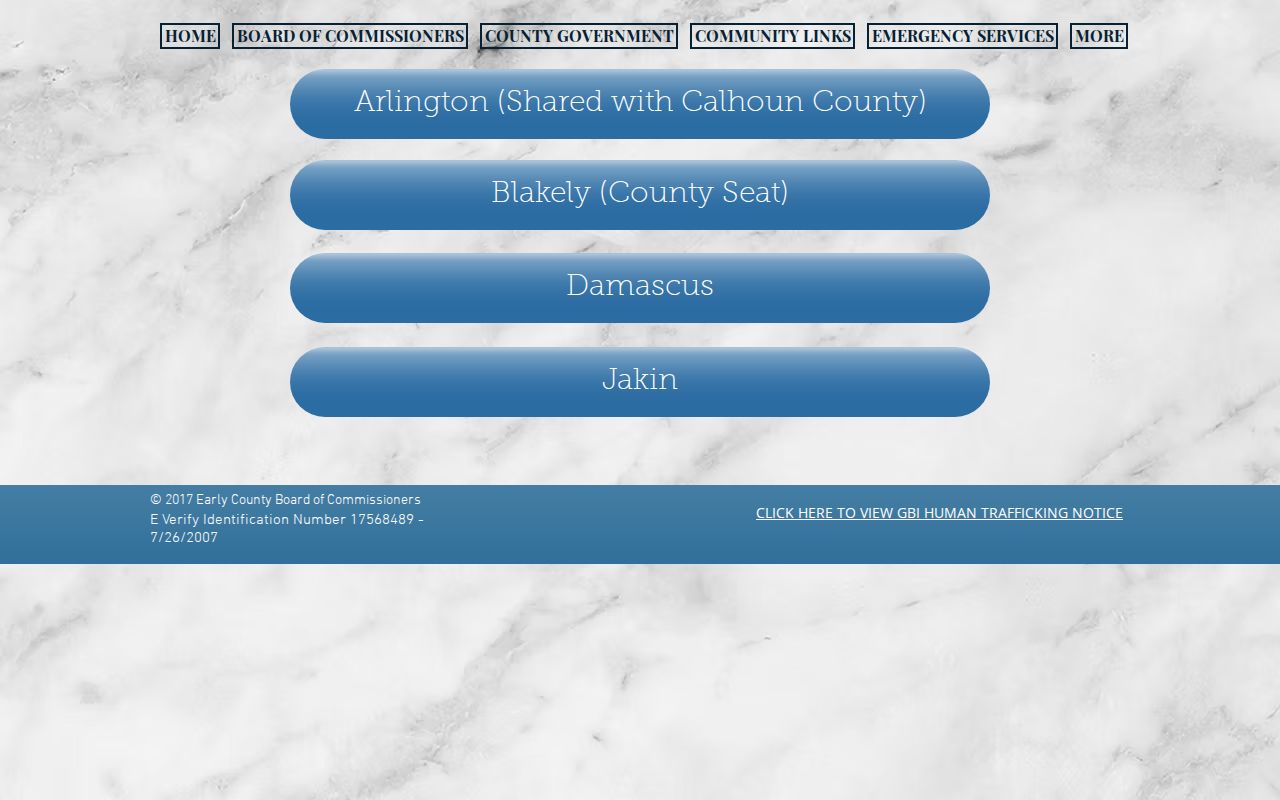
These four cities are the complete city-page set for this county build.
Blakely Court Records
5,371 displayed official population. County seat and city traffic route.
Arlington Court Records
1,209 displayed official population. Municipal court spans Calhoun and Early context.
Damascus Court Records
212 displayed official population. Charter-based municipal court framework.
Jakin Court Records
131 displayed official population. City-court status requires confirmation.
Map and Directions to the Early County Courthouse
Superior, State, and Juvenile Court filings are kept with the Clerk of Superior Court, whose office is at 111 Court Square, Suite C, on Blakely's historic courthouse square. This is a different address than the county's general administration office at 204 Court Square, so a court-file question should go to Suite C rather than the county's main line. The 1904-05 courthouse building at the square is a Neoclassical Revival landmark rehabilitated in 1992.
Early Superior Court Clerk
111 Court Square, Suite C
Blakely, GA 39823
(229) 723-3033
The research did not confirm the clerk's own counter hours, a courthouse Public Access Terminal's room or hours, or a parking or security policy for Suite C, so calling (229) 723-3033 before a trip is the safest step.